Zirovnica
Where to find us?
Žirovnica is located just 5km from Bled, 22km from Kranjska Gora and 25km from Bohinj. The medieval town of Radovljica, Lesce Sports Airfield, Bled Golf Course and the Bled and Šobec campsites are all in close proximity. Ljubljana (Brnik) airport is 35km away.
How to reach us:
- from Austria (Villach) or Italy (Tarvisio) on the Gorenjska motorway to the exit for Lipce. Turn towards Jesenice and then Slovenski Javornik. At the first crossroads with traffic lights turn right towards Žirovnica (signed Žirovnica 5km).
- from Ljubljana on the Gorenjska motorway past Kranj. Leave the motorway at the exit for Bled and at the crossroads take the exit for Žirovnica.
 Path of Cultural Heritage
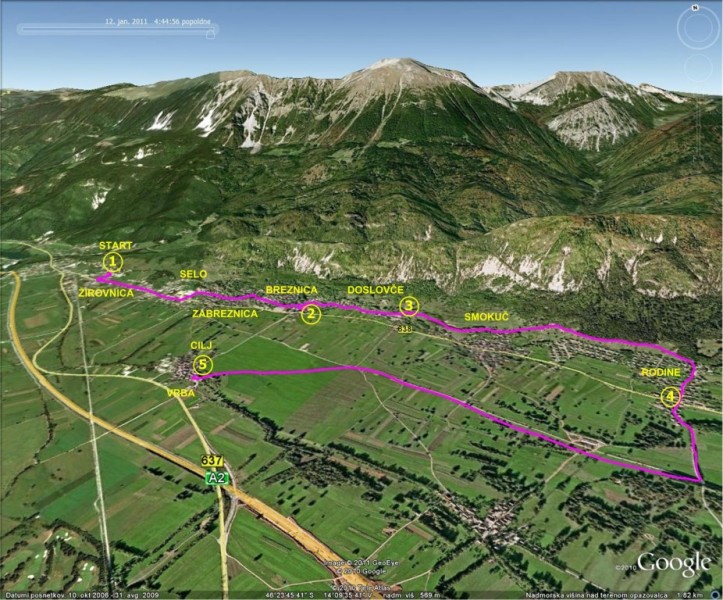
The villages in the shelter of Stol, the highest peak of the Karavanke range, are surrounded by wonderful nature, inhabited by friendly people and are noted for their rich cultural heritage. Our hallmark is the Path of Cultural Heritage. The path connects the birth houses of important Slovenes; our compatriots Matija Čop, Franc Saleški Finžgar, Janez Jalen, Dr. France Prešeren and also Anton Janša's beehive. Along the path, in addition to five of the most interesting sights, there are numerous other points of interest worth pausing to visit.
Sights of interest along the path
 1. Čop's Birth House
The Path of Cultural Heritage film presentation
The seat of the Žirovnica Institute for Tourism and Culture
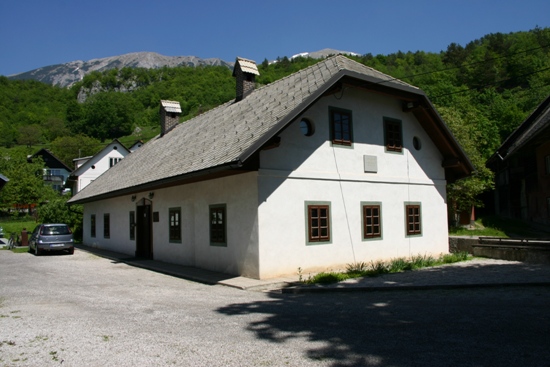
The birth house of Matija Čop, known locally as 'Pri Ovseniku', is situated in the old village centre of Žirovnica. In the 1980's, the house was repurchased on the initiative of local pupils who organised a campaign to collect money among their peers from all over Slovenia. The renovated house, with a room dedicated to the memory of Matija Čop, was opened to the public in 1994. It serves as a space for events and an information point for the Municipality of Žirovnica.
Matija Čop (1797-1835), the first Slovene linguist, literary historian and librarian, was one of the most important European scholars of his time. His cultural and political activities raised the cultural awareness of the Slovene nation. He spoke nineteen different languages. As an exceptional scholar of classics and contemporary literature, he was an important influence on his good friend, Dr France Prešeren, and his poetry.
The Alley of Famous Men in Zabreznica
In his famous sermon in 1912, Tomo Zupan, the literary historian, who specialised in the work of Dr. France Prešeren, identified 120 distinguished men who were born in the parish of Breznica and had an influence on the development of Slovene culture and knowledge. The Alley of Famous Men, at the Žirovnica Primary School, unites the five most notable among them. The busts of Anton Janša, Matija Čop, Dr. France Prešeren, Franc Saleški Finzgar and Janez Jalen were created by the sculptors Zdenko Kalin, Jaka Torkar and Bojan Kunaver.
 2. Janša's Beehive in Breznica
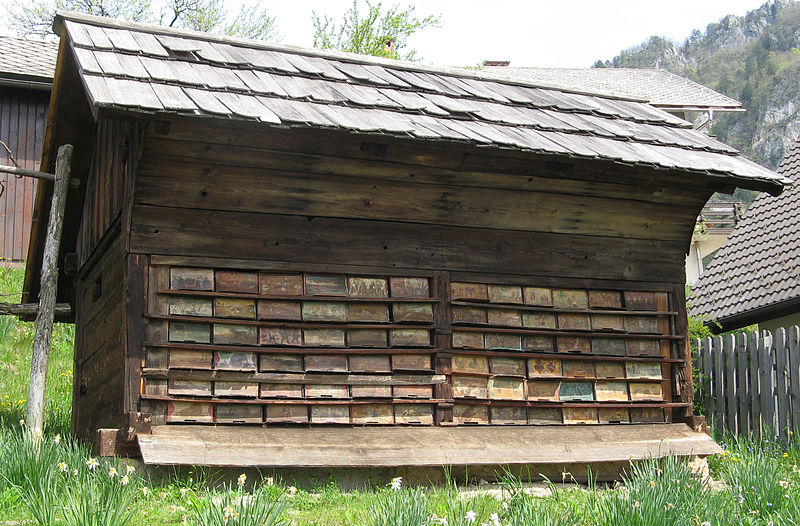
Janša's Beehive in Breznica is a reconstruction of the beehive which once stood beside Kuhar's House in Breznica, where Anton Janša was born. Today, his birth house no longer exists and the beehive, where he became a master of beekeeping, remained until the year 1877. In its place, and using the original, and building in a four metre oak beam, a new beehive was constructed. Some of the beehive panels have also been preserved from the original. Beside the beehive is a memorial plaque with the inscription: Anton Janša practiced beekeeping in this place.
2. Janša's Beehive in Breznica
Janša's Beehive in Breznica is a reconstruction of the beehive which once stood beside Kuhar's House in Breznica, where Anton Janša was born. Today, his birth house no longer exists and the beehive, where he became a master of beekeeping, remained until the year 1877. In its place, and using the original, and building in a four metre oak beam, a new beehive was constructed. Some of the beehive panels have also been preserved from the original. Beside the beehive is a memorial plaque with the inscription: Anton Janša practiced beekeeping in this place.
 3. The Birth House of Franc Saleški Finžgar in Doslovče
An exhibition about the life and work of Franc Saleški Finžgar
Outdoor Museum
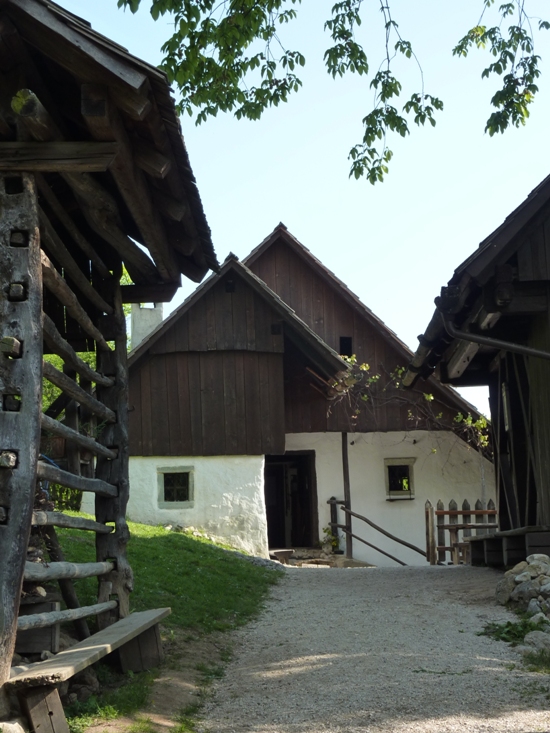
Finžgar's birth house, known locally as 'Pri Dolencu', together with its hayrack and barn, form the outdoor museum which exhibits the construction and residential culture of crofters at the end of the 19th century in Gorenjska. In the cellar area, there is an exhibition about the life and work of Franc Saleški Finžgar.
Franc Saleški Finžgar (1871-1962) is written into Slovene literary history as a master of folk narrative art. As he himself said, his sense of genuine language was shaped beside his home fireplace, where he would listen to tales of men who had spent winter evenings gathering in Dolenc's hut. Among his known works are the novel 'Under the Free Sun' (Pod Svobodnim soncem), 'The Tale of Maid Ančka' (povest Dekla Ančka), the drama 'Chain' (Veriga), the fairytale 'Makalonca' and others. A penetrative force, principled and honest, Finžjar won the trust of people everywhere in his work as a priest, editor and writer.
3. The Birth House of Franc Saleški Finžgar in Doslovče
An exhibition about the life and work of Franc Saleški Finžgar
Outdoor Museum
Finžgar's birth house, known locally as 'Pri Dolencu', together with its hayrack and barn, form the outdoor museum which exhibits the construction and residential culture of crofters at the end of the 19th century in Gorenjska. In the cellar area, there is an exhibition about the life and work of Franc Saleški Finžgar.
Franc Saleški Finžgar (1871-1962) is written into Slovene literary history as a master of folk narrative art. As he himself said, his sense of genuine language was shaped beside his home fireplace, where he would listen to tales of men who had spent winter evenings gathering in Dolenc's hut. Among his known works are the novel 'Under the Free Sun' (Pod Svobodnim soncem), 'The Tale of Maid Ančka' (povest Dekla Ančka), the drama 'Chain' (Veriga), the fairytale 'Makalonca' and others. A penetrative force, principled and honest, Finžjar won the trust of people everywhere in his work as a priest, editor and writer.
 4. The Birth House of Janez Jalen in Rodine
An exhibition about the life and work of Janez Jalen
Easter exhibition of decorated eggs
Christmas exhibition of cribs
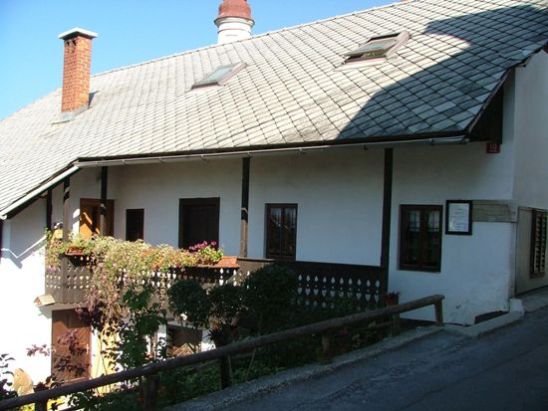
Jalen's birth house in Rodine is situated right next to Saint Clement's Church. The house is locally known as 'pri Mežnarju' since until the end of the second world war, the house served as a home to the churchwarden. Today the house is divided into a museum and a residential part, where Jalen's great nephew lives and cares for his extensive legacy. The museum areas comprise an entrance hall, black kitchen, a house and a small room which has been rearranged into Jalen's work room.
4. The Birth House of Janez Jalen in Rodine
An exhibition about the life and work of Janez Jalen
Easter exhibition of decorated eggs
Christmas exhibition of cribs
Jalen's birth house in Rodine is situated right next to Saint Clement's Church. The house is locally known as 'pri Mežnarju' since until the end of the second world war, the house served as a home to the churchwarden. Today the house is divided into a museum and a residential part, where Jalen's great nephew lives and cares for his extensive legacy. The museum areas comprise an entrance hall, black kitchen, a house and a small room which has been rearranged into Jalen's work room.
The writer and dramatist Janez Jalen (1891-1966) sought the inspiration for his narrative work among nature and in the lives of the simple people in his home environment. His tales are woven with picturesque descriptions of the Gorenjska highlands and animals; his heroes were farmers, herdsmen, hunters and coachmen. Jalen is best known for his works 'Vozarji', 'Cvetkova', 'Cilka' and 'Bobri'.
St. Clement's Church in Rodine
In the past, Rodine with its church, St. Clement's was an important religious centre as in the middle ages it was the seat of the province and later the seat of the parish. The church and cemetery with its surrounding walls is one of the finest monuments of sacral architecture in this part of the Gorenjksa region. Its Roman foundations extend back to the 11th century. According to legend, the relics for the church were brought by the saints Ciril and Methodius, when they travelled through Rodine to Rome with the remains of St. Clement after his death.
5. Prešeren's Birth House in Vrba
Permanent exhibition about the life and work of Dr. France Prešeren
Book Collection
Memorial Plaque for the Archbishop Anton Vovk
Museum Shop
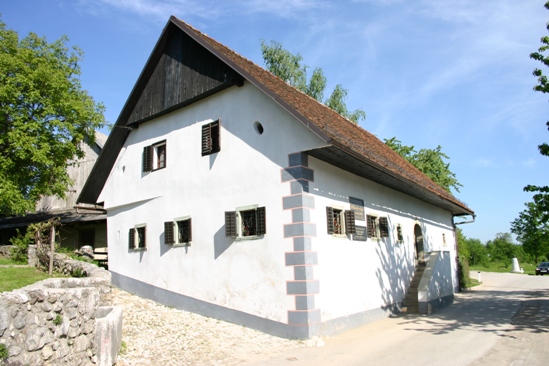
The house in which Dr. France Prešeren was born, was built in the 16th century and is known locally as 'Pri Ribč'. Originally the building was partly wooden. Later, following extensions it became a typical landowner's house. The appearance of the house today dates from 1856, after a fire affected the village of Vrba. In 1938 the house was repurchased whilst its adjoining outbuildings remained in the ownership of the Ribč family. On the 21st May 1939, Prešeren's house was declared open as a museum. The entrance hall, house and closet are equipped with furniture and objects from the time of Prešeren's life. The black kitchen remains as it was in days gone-by whilst the former granary is home to a permanent exhibition about the life and work of the poet.
A hundred years after Prešeren's birth, Archbishop Anton Vovk (1900-1936) was born in Prešeren's house. In 1866, on the publication of 'Poezij', a collection of Prešeren's poems, Josip Stritar wrote “What Shakespeare is to the English, Racine to the French, Dante to the Italians, Goethe to the Germans, Puškin to the Russians, Mickiewicz to the Polish – Prešeren is to the Slovenes.” Dr. France Prešeren (1800-1849) was the first among Slovene poets who played an important historical role in enforcing the Slovene language and demanded that Slovenes become equals among European nations. His own vision about equal rights and friendly co-existence among all nations, was expressed in his poem 'Zdravljica', which upon Slovenia becoming independent, became the Slovene national anthem.
Prešeren's Monument in Vrba
The statue of Dr. France Prešeren in Vrba is the first sculpture of the poet and was made by the academic sculptor Franc Ksaver Zajec in 1865. For many years the statue was regarded as lost, but in 1991 it was found once again. The plaster original was restored and four bronze casts were made. The monument with Zajec's depiction of Prešeren in Vrba, was sculpted by Vasja Ulrich. It was unveiled on the 3rd December 2000, to mark the 200th anniversary of the poet's birth. It is placed so that it greets everyone who comes to Vrba.